
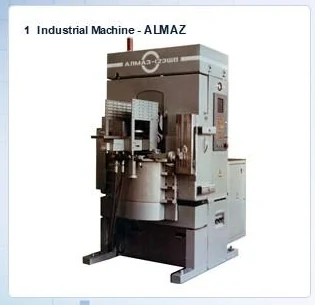
01 · Machine
Recorded operating basis
The machine purpose, original support architecture and documented operating behaviour define the engineering question.
Architecture & Evidence Package
This deeper engagement starts after the decision and scope are defined. AURA carries the selected architecture through calculation, spindle/rotor consequence and targeted evidence work while preserving assumptions, provenance and release boundaries.
Reconstruction and method chain
The pilot does not start from an isolated solver image. One controlled operating basis is carried from the machine question through the bearing state and rotor consequence, then compared with the evidence that actually exists.
The machine purpose, original support architecture and documented operating behaviour define the engineering question.
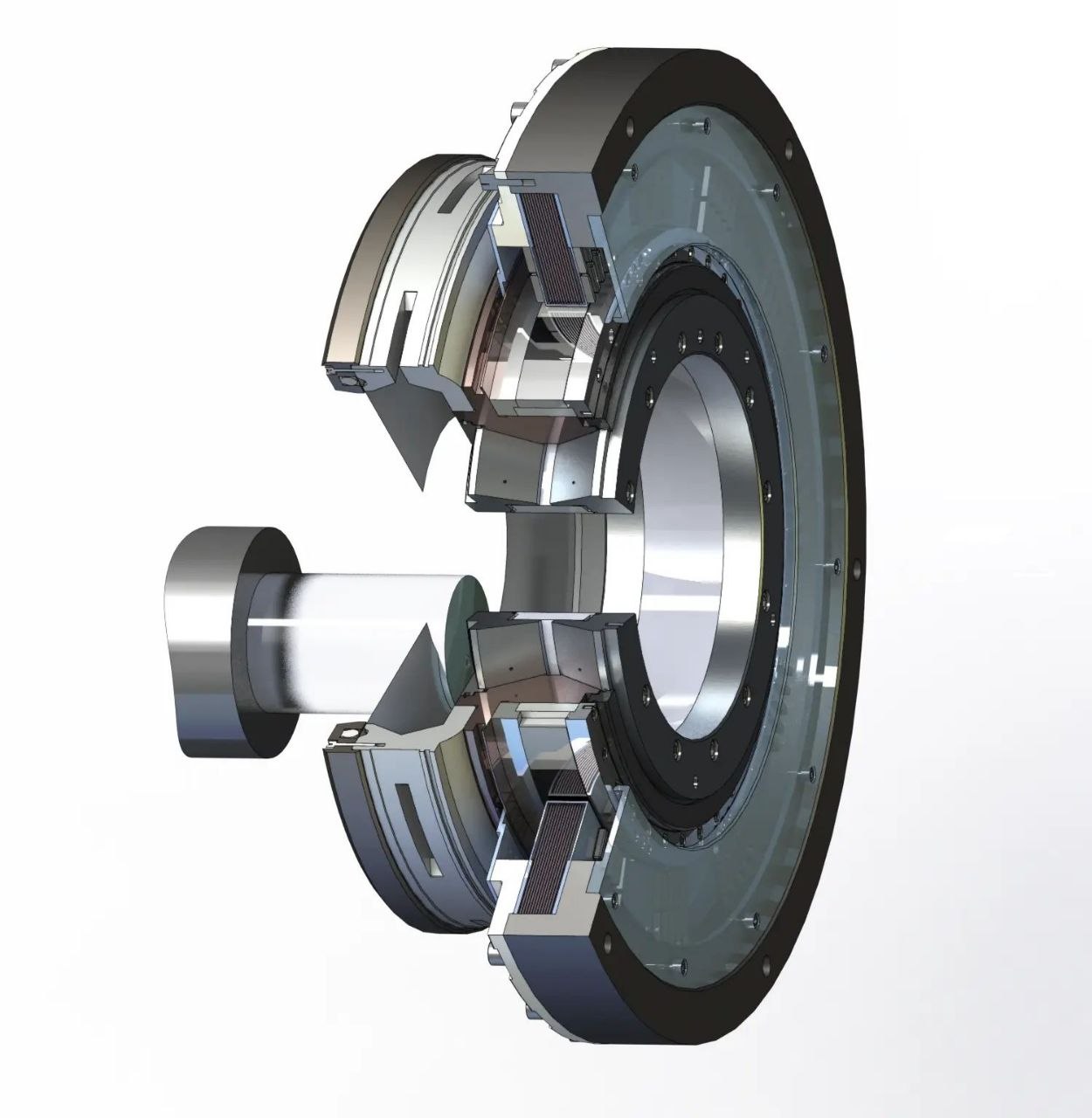
Cone angle, clearances, restrictor layout and surrounding architecture are made explicit before the physical state is calculated.
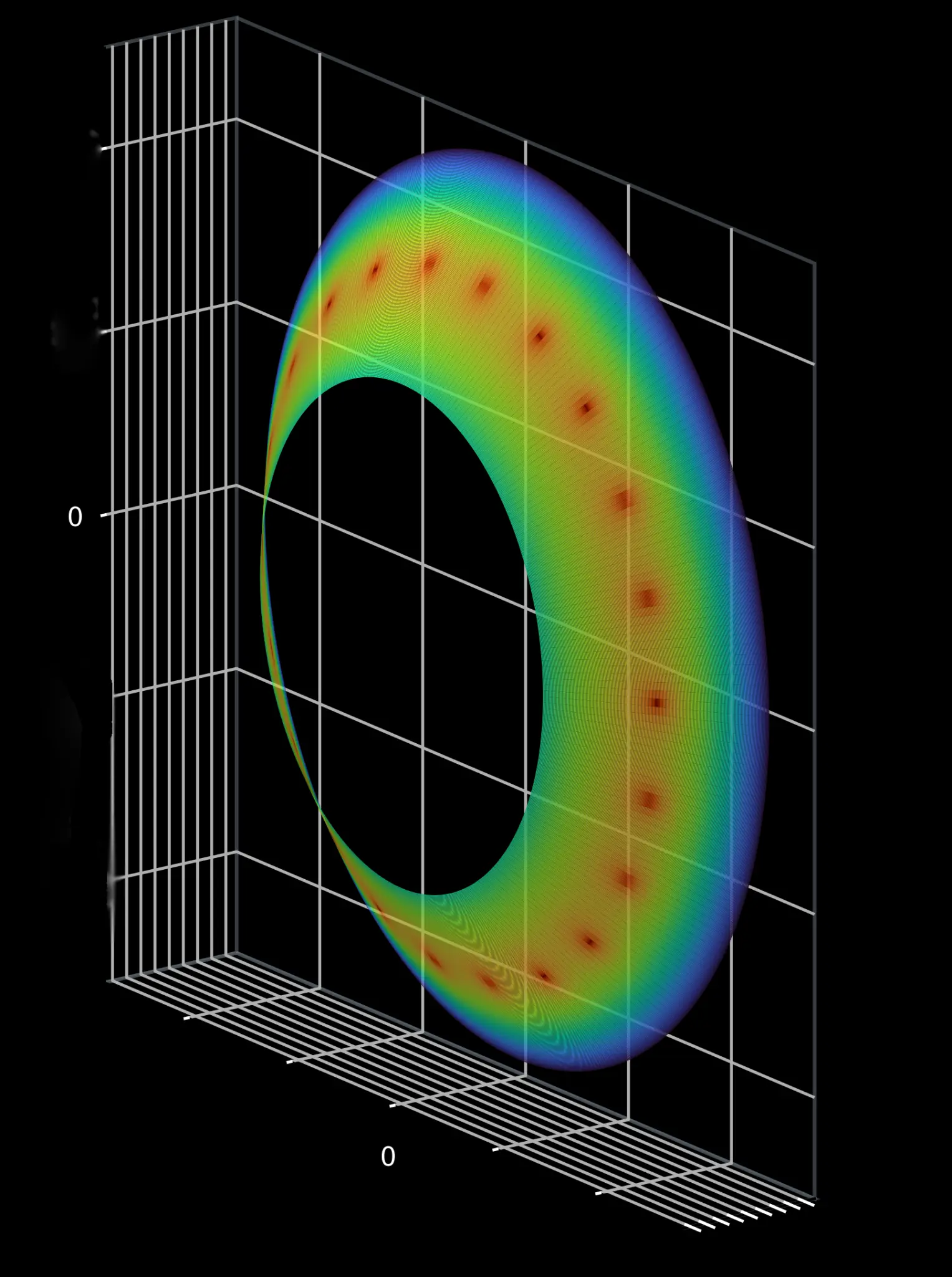
The defined bearing state is solved over the conical support surface; the field is evidence for the next physical quantities, not the endpoint.
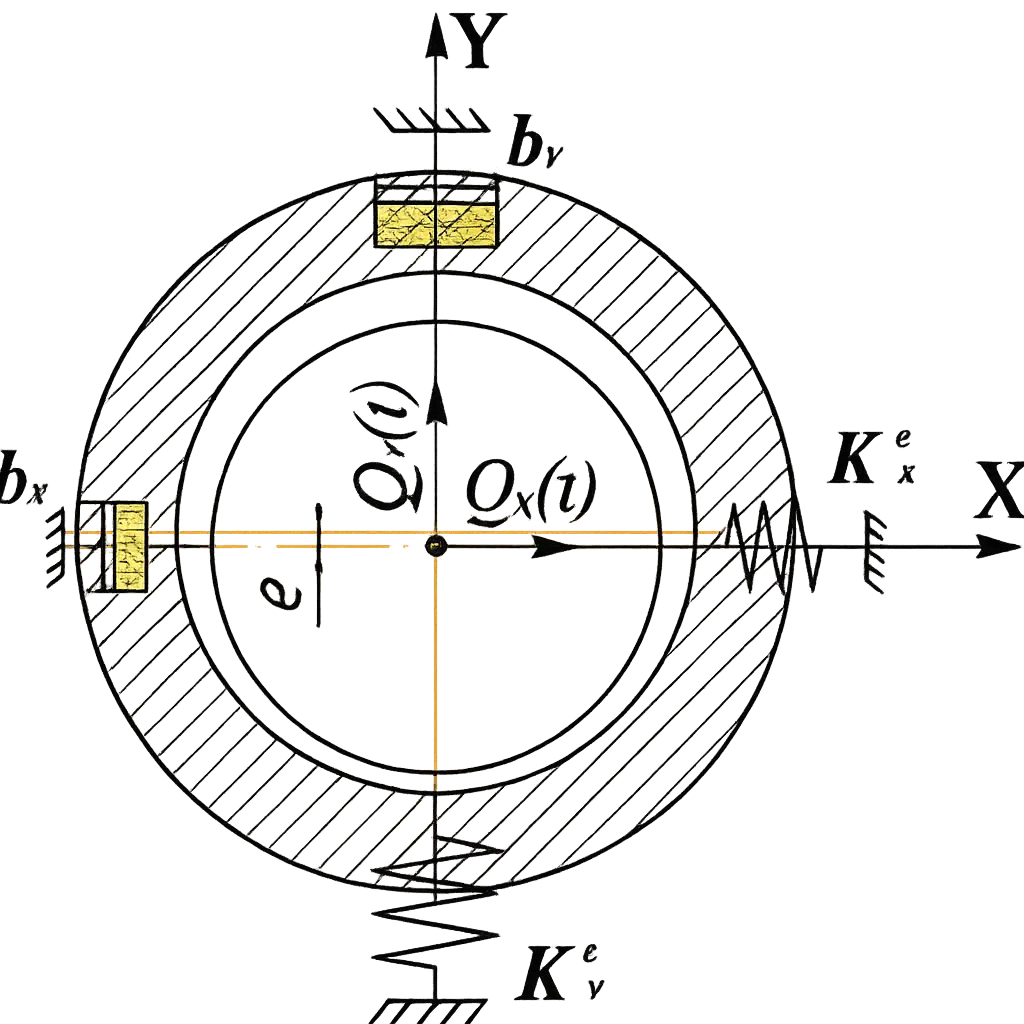
Integrated pressure is converted into radial, axial and moment reactions together with the support coefficients required by the spindle model.
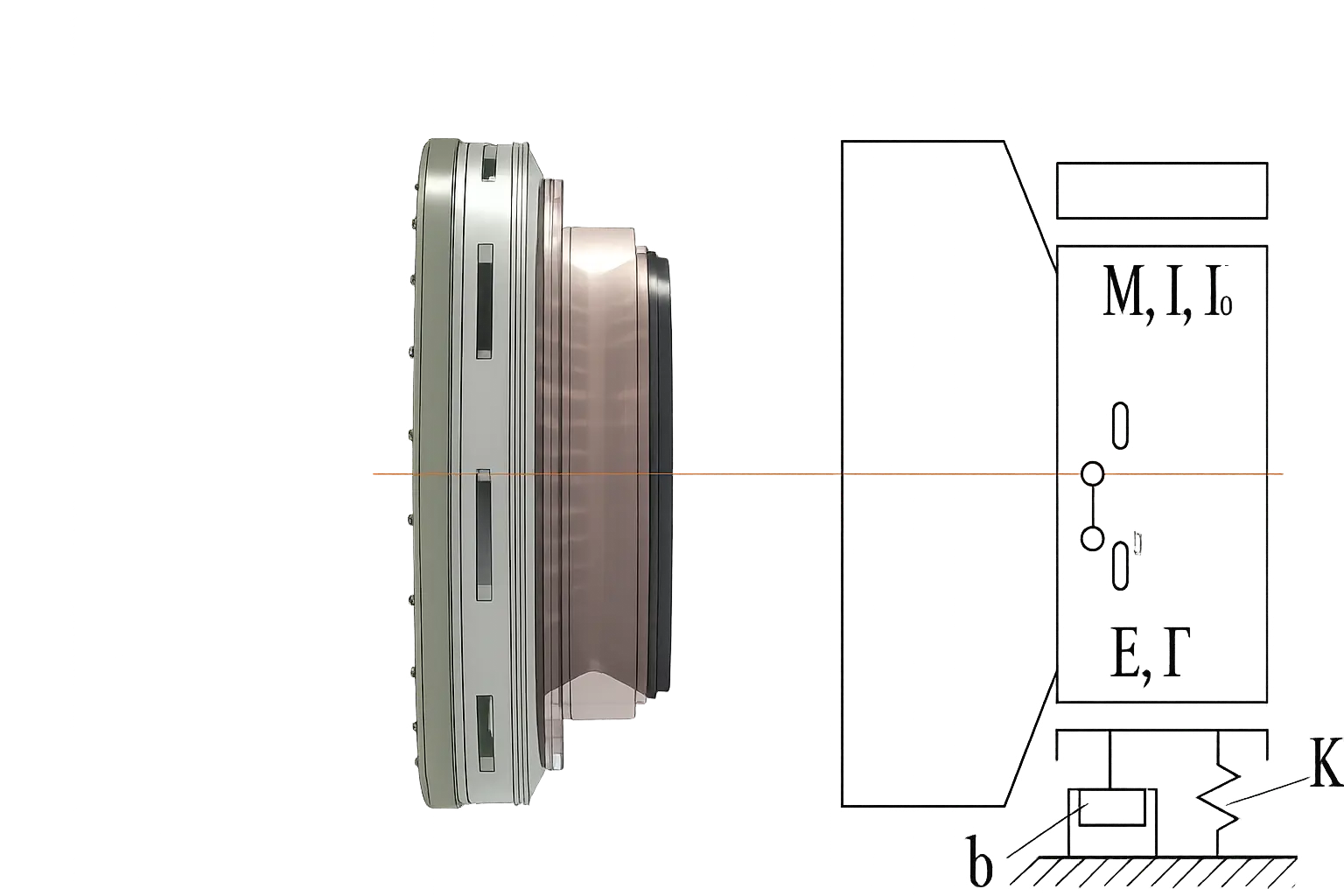
Equivalent stiffness and damping are carried into the spindle model to screen response, critical states and operating consequences.
Applies only to the documented ALMAZ prototype and recorded operating basis. It is not a universal error bound.
5–10% reported deviation applies to the documented ALMAZ prototype and recorded operating basis. It is not a universal error bound.
Review the ALMAZ case →How the engagement runs
The engineering chain above describes the subject matter. The pilot itself is managed as a bounded engagement with an explicit decision question and release boundary.
Define the machine, operating basis, alternatives and the decision the pilot must support.
Align geometry, units, support state, loads, speed range, assumptions and available validation evidence.
Run direct calculation or inverse synthesis, configure the spindle and screen critical speeds, response and stability.
Record results, provenance, operating state, evidence status, unresolved gaps and the next allowed action.
Inputs needed
Deliverable
Commercial structure
A written scope fixes the case, inputs, outputs, exclusions, milestones, responsibilities and the engineering decision. A narrower Architecture Screen is used when one defined decision can be closed first.
Case, inputs, outputs, exclusions, milestones and decision question are agreed before modelling begins.
The client receives the agreed report package, controlled case inputs and a clear basis for the next design, test or review decision.
Confidential files move only after written terms. Client background IP remains client IP; AURA platform IP remains with Breshev Engineering.
Read the data-handling basis →Frequently asked questions
Not always. A feasibility or architecture case can begin with controlled dimensions, loads, operating conditions and geometry limits. Higher-authority conclusions require correspondingly stronger geometry and evidence.
No. The pilot identifies what calculation supports, where the evidence boundary lies and which test would reduce the most decision-critical uncertainty.
Yes. NDA and project-specific data-handling terms can be agreed before confidential geometry, reports or test data are transferred.
The scope discussion stops before engagement. No confidential files are needed for the initial fit check.
Low-friction first step
Do not attach confidential files at this stage. Machine type, RPM range, constraints and the decision you need are enough for the first fit check.
This is the same Breshev Engineering project-request form used by the Architecture Screen. No file upload is enabled at the first-contact stage.