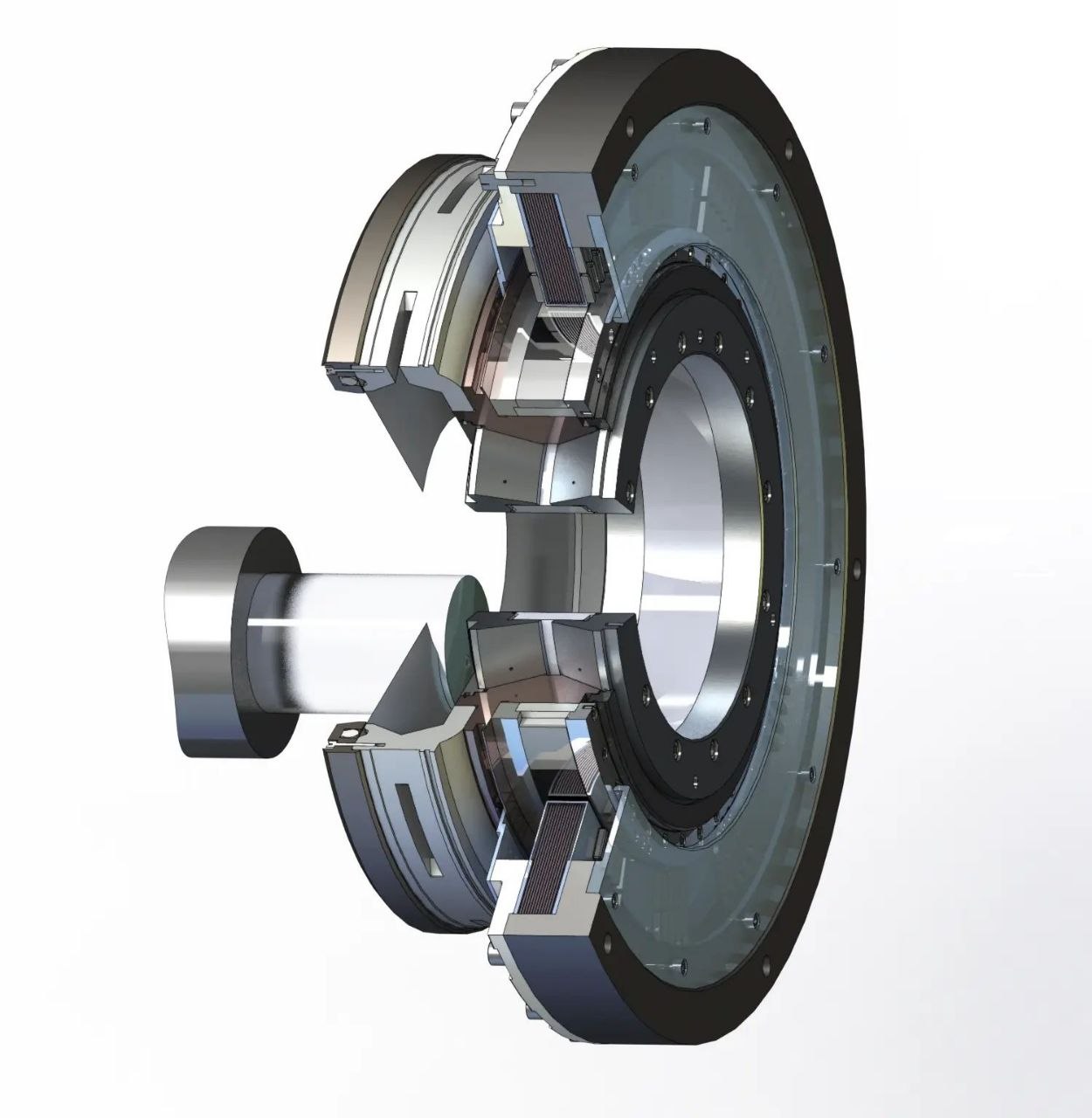
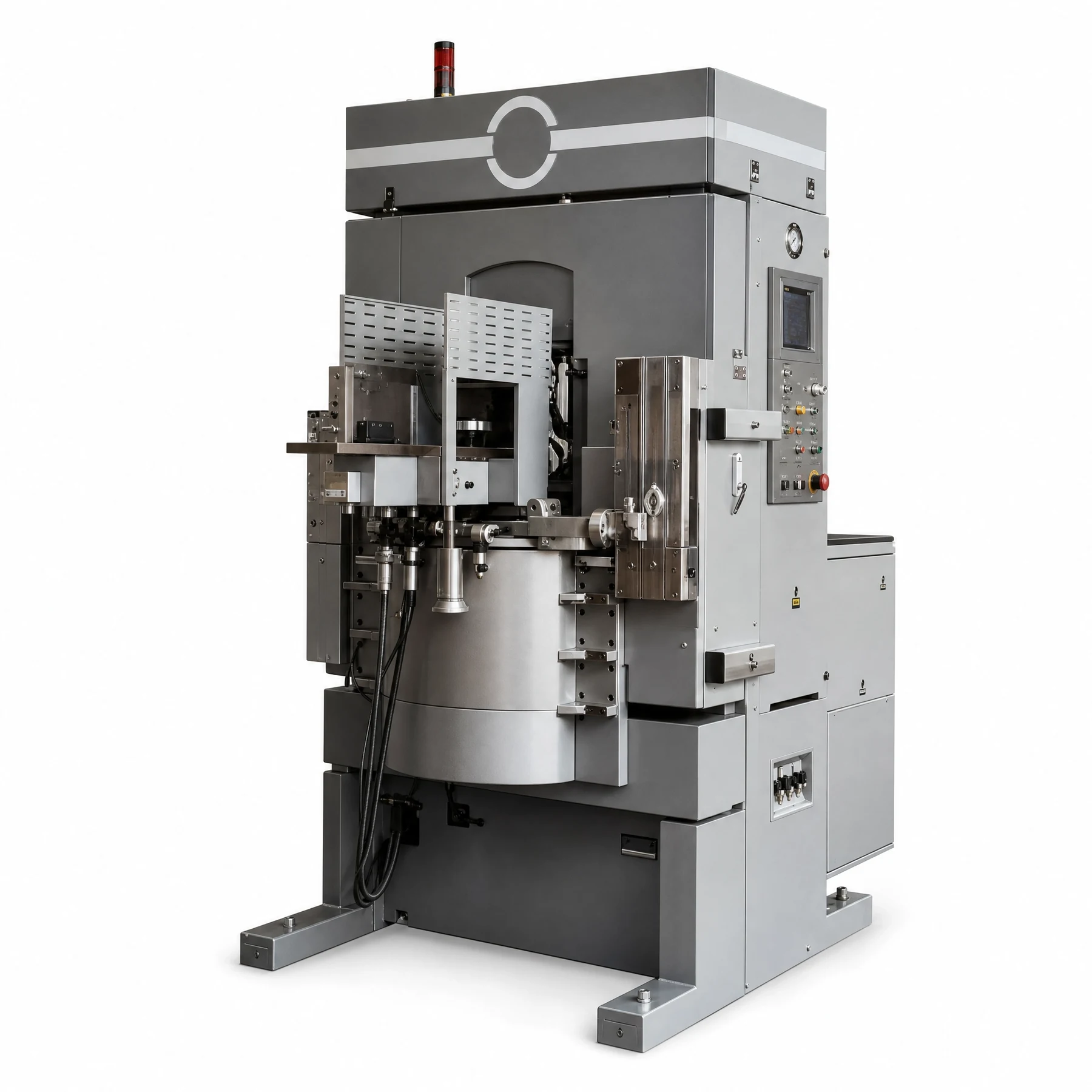
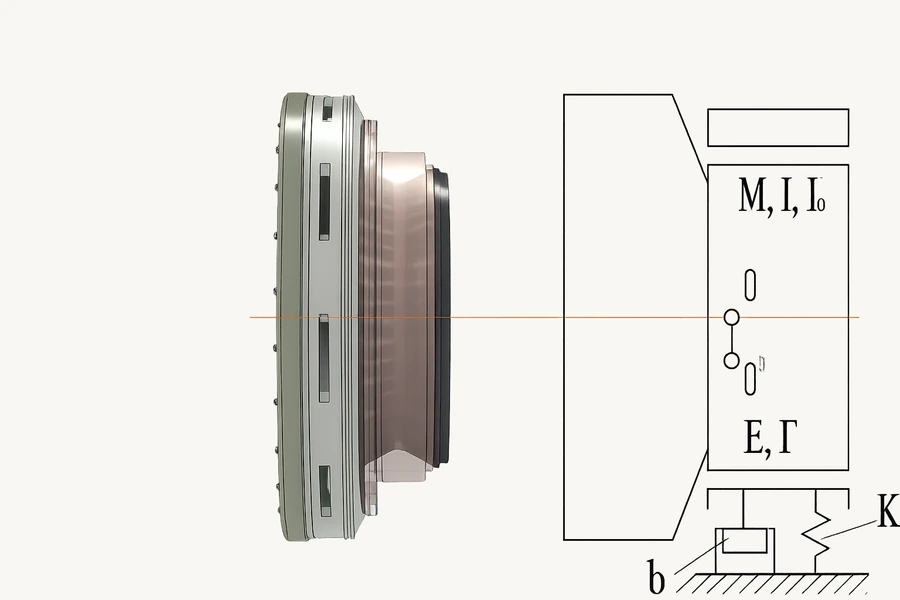
A documented conical gas-static direct-drive spindle connects the original machine, engineering drawings, CAD reconstruction, analytical method chain and recorded operating comparison.
Drawings digitised in 2009Geometry and design intent reconstructed.
Original designer consultedOperating logic and architecture preserved.
5–10% reported deviationRecorded prototype and operating basis.
The engineering question
Could the original conical support be reconstructed as a repeatable engineering method?
The original spindle was developed through industrial iteration. The later programme recovered the architecture, rebuilt the geometry and connected the gas-film pressure solution to support reactions and machine dynamics.
ArchitectureSingle-support direct drive
Bearing typeConical gas-static radial-thrust support
ApplicationIndustrial slicing of single-crystal ingots
Engineering roleOrigin case behind the AURA conical method chain
Documented baseline
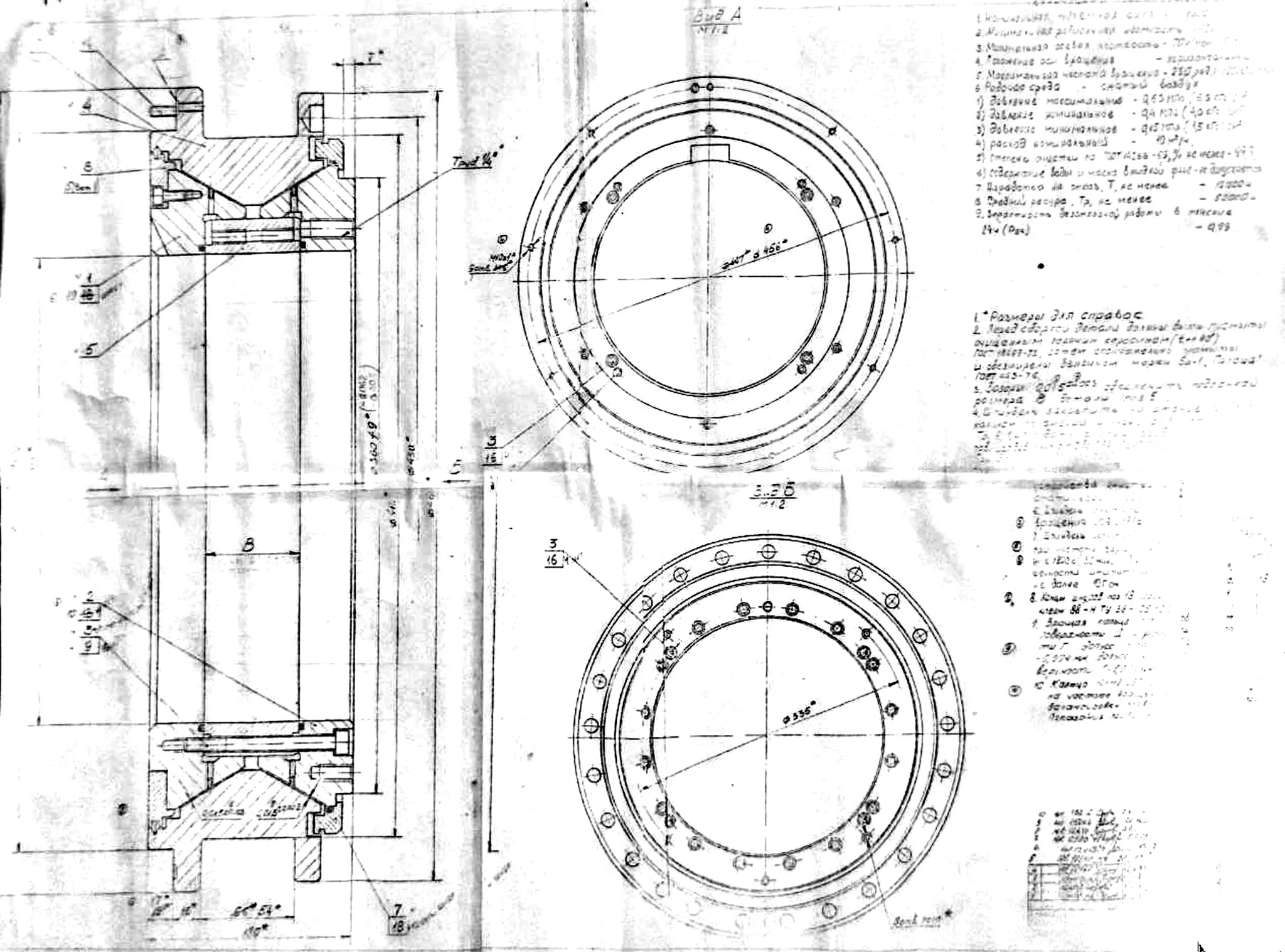
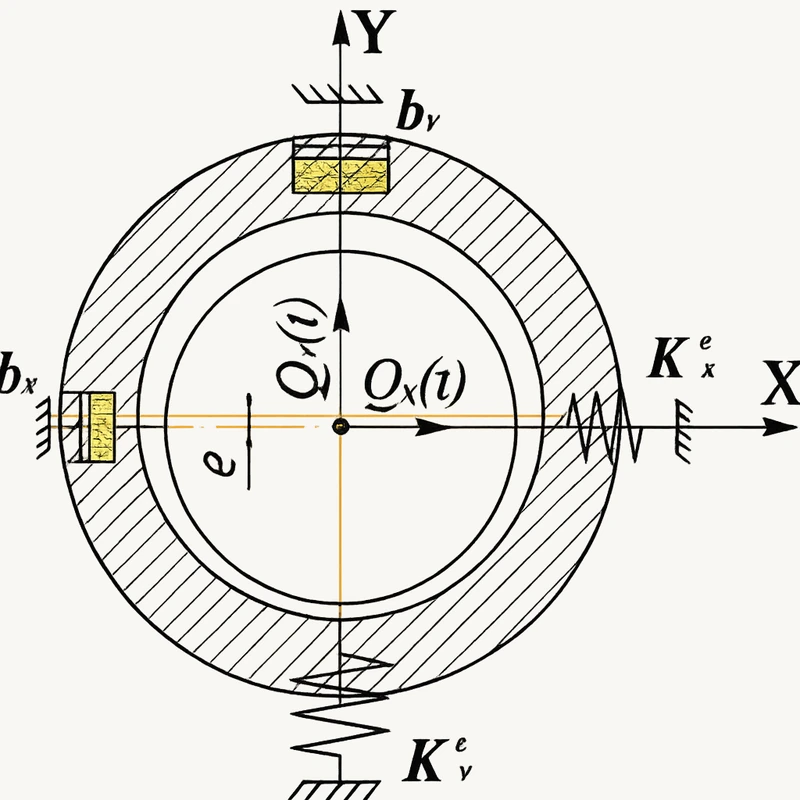
The original drawing fixes the geometry and the design intent.
Original spindle drawing used in the reconstruction programme.
Recorded baseline input
Architecture
Single-support direct drive
Bearing type
Conical gas-static radial-thrust
R / L / C basis
175 mm / 97 mm / 15 µm
Supply range
0.38–0.63 MPa
Restrictors
22 · d₀ = 0.5 mm
The values are shown as recorded for the documented origin case.
Engineering context:These values belong to the documented ALMAZ geometry at C = 15 µm and pₛ = 0.38 MPa. The reported 5–10% comparison applies only to this documented case.
Industrial check
Bearing physics became evidence when the machine agreed.
Case-specific evidence boundary
5–10%reported deviation
The comparison belongs to the documented ALMAZ prototype and its recorded operating basis. It is retained as an industrial check of this case, not promoted into a universal method-error claim.
What the case established
The conical support architecture could be reconstructed from the original machine and drawings.
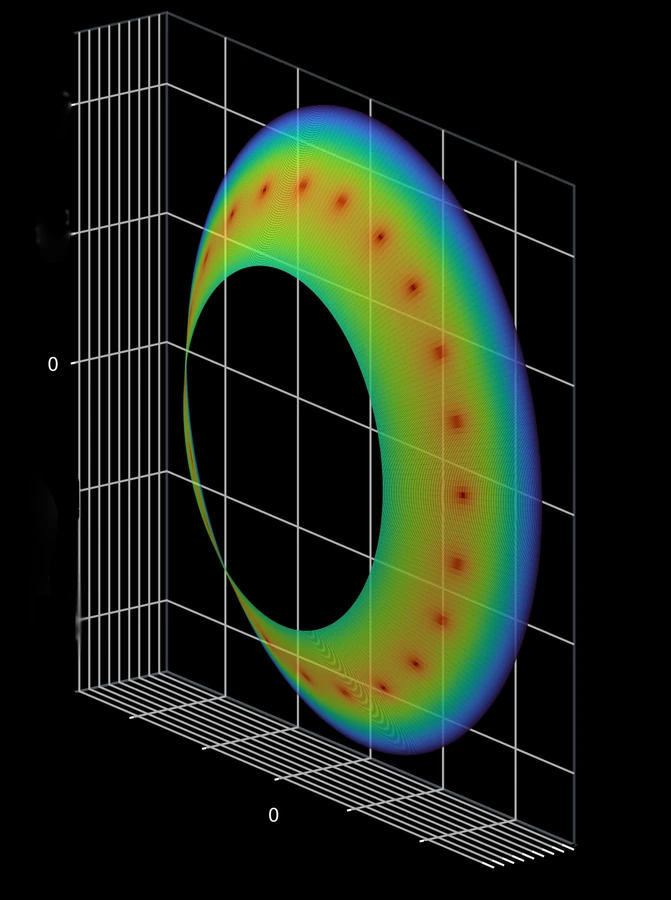
The pressure solution could be carried into radial, axial and moment reactions.
The support result could be connected to spindle-level dynamics.
The recorded operating comparison provided a case-specific industrial check.