
Primary delivery focus · precision spindles
Before you select a spindle supplier, establish what the spindle must actually prove.
Use an independent Architecture Screen to define the operating envelope, viable bearing–shaft–rotor options, governing risks and acceptance questions before supplier commitment, detailed CFD / FE or CAD freeze.
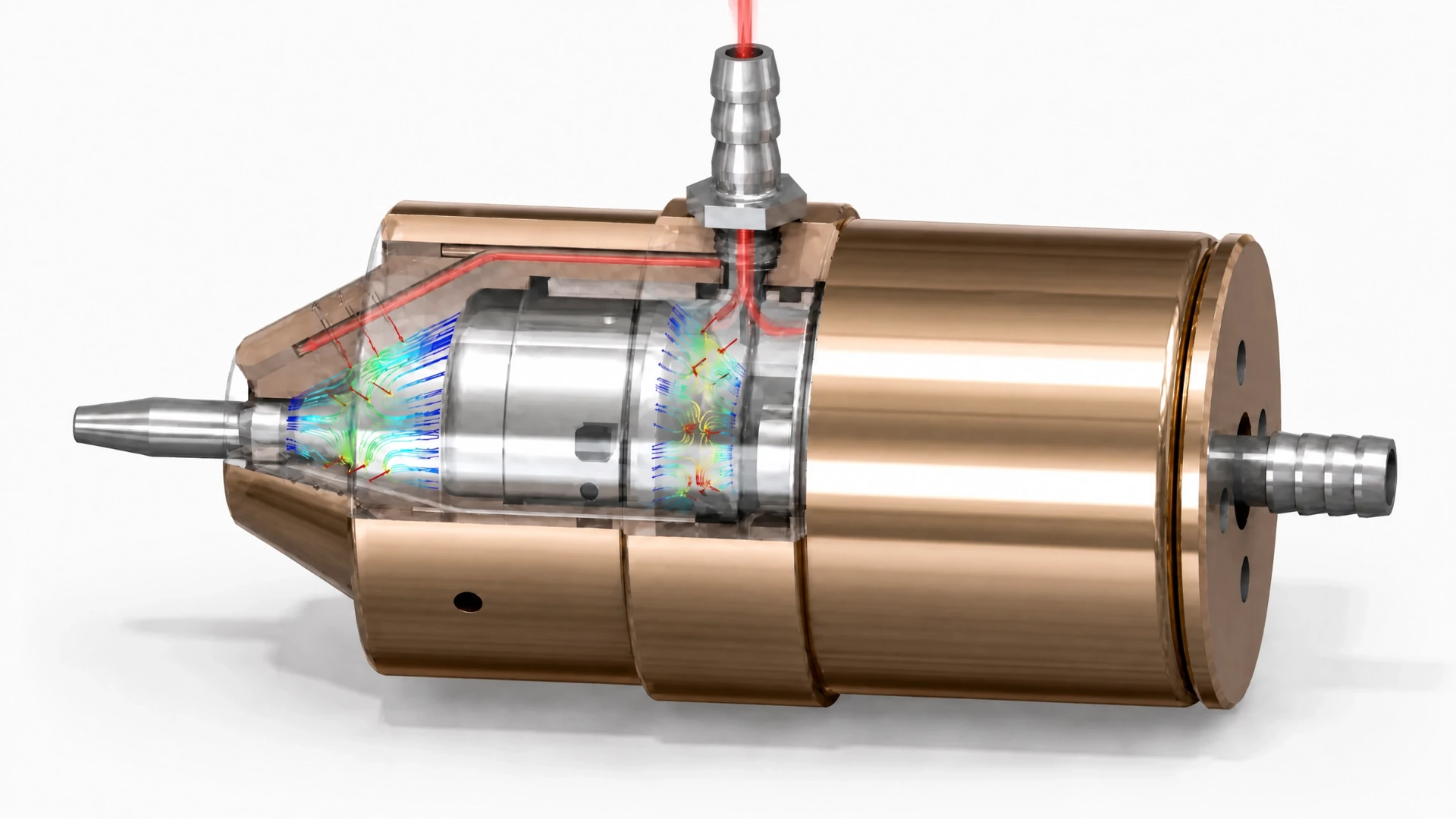
In 60 seconds
The decision boundary before detailed engineering.
Three live decision moments
Engage when the next commitment will make the architecture harder to unwind.
The trigger is not interest in gas bearings. It is a live machine programme where architecture, supplier brief or proof scope is still open.
A custom spindle architecture must be defined.
Loads, speed, accuracy and packaging exist, but the bearing–shaft architecture is not frozen.
The process, material or duty point has moved.
An existing support concept must be re-screened against the new state before detailed redesign.
The downstream question is not yet well posed.
Create supplier-independent requirements and identify which assumptions detailed CAE or supplier engineering must actually prove.
Pre-RFQ decision asset
Is the spindle brief ready to go to a supplier?
Run fifteen checks before a provisional bearing geometry, supplier assumption or CAE scope becomes a hidden architecture decision.
What the spindle must prove
The machine decision is wider than the bearing calculation.
A defensible brief keeps six coupled domains visible before the team decides which supplier, CAE model or test programme should carry the next proof.
The screen does not assume bearing wear is the dominant risk. Supply, alignment, integration and acceptance conditions stay visible because a sound gas-bearing design can still fail the machine decision if those interfaces are unresolved.
System consequence
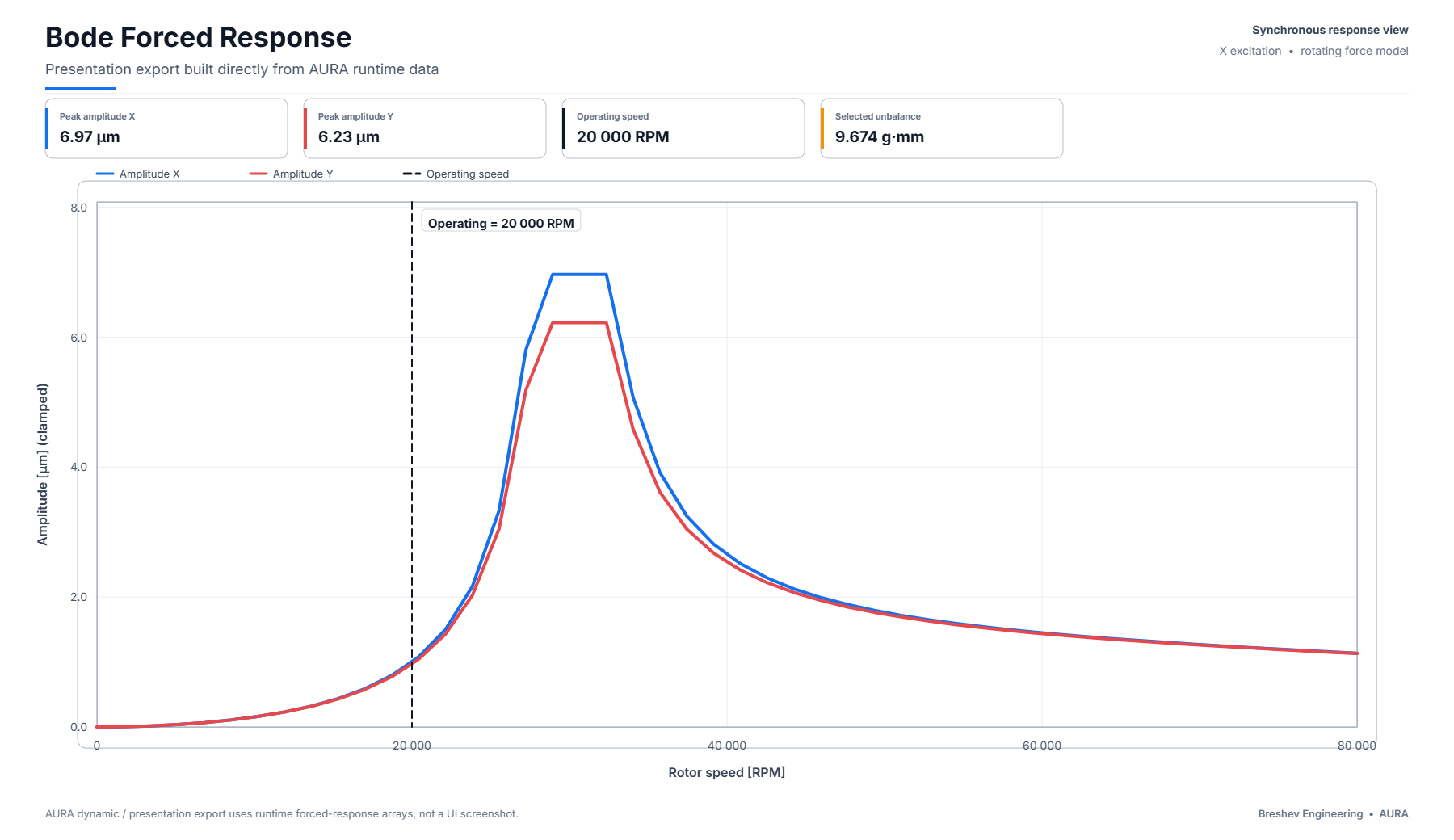
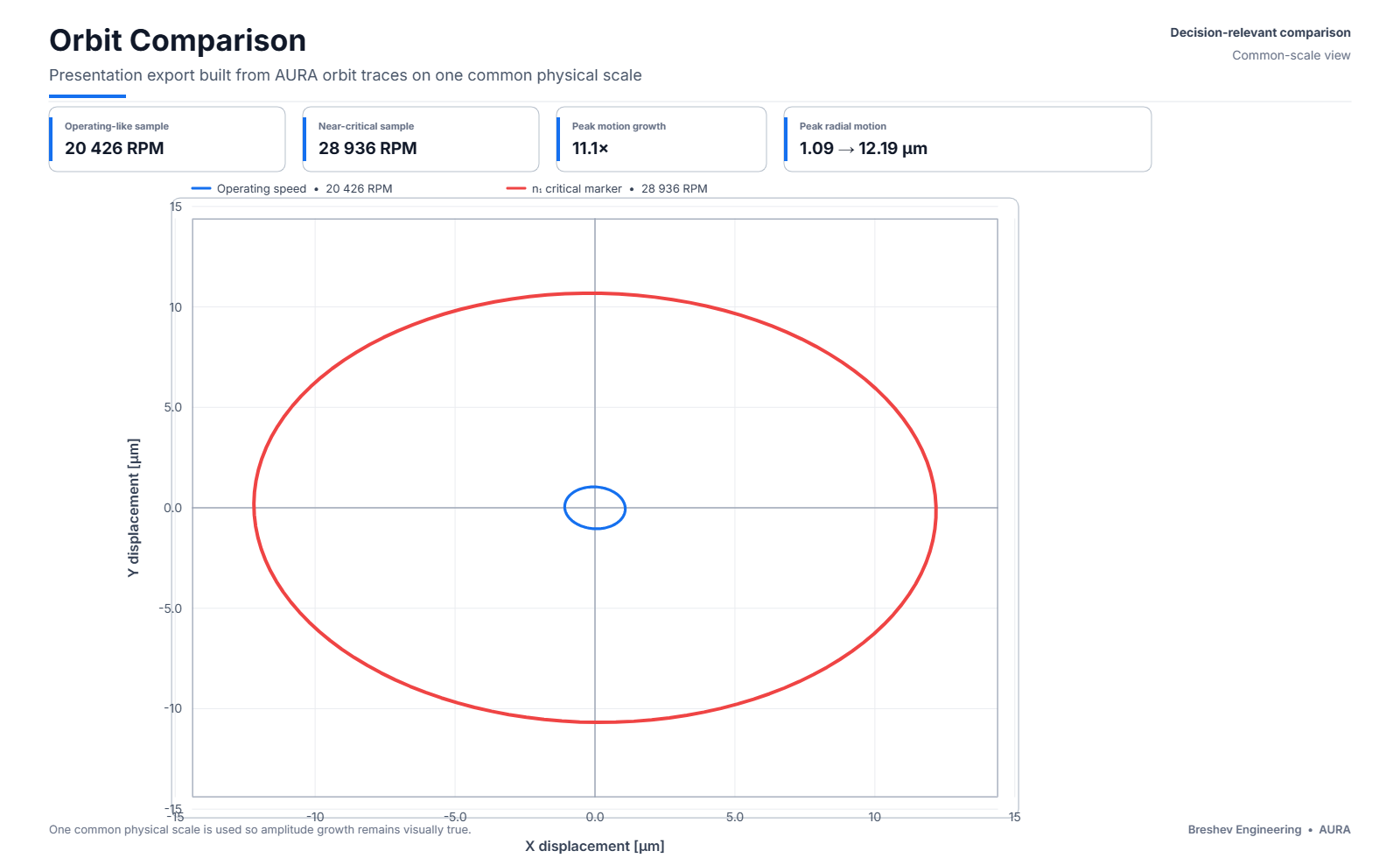
Response is judged on the named spindle state, not on one catalogue coefficient.
The selected operating point is carried into forced response and orbit comparison so the machine-level consequence remains visible before the supplier brief is frozen.
Engineering decision questions
Four catalogue questions worth resolving before the spindle brief is frozen.
Not universal penalties. Not manufacturer-specific failure claims. Each question must be answered against the actual machine state and coefficient definition.
Which stiffness does your rotor model actually need?
The coefficient definition and running state matter as much as the printed number.
How much catalogue margin survives the operating envelope?
The governing corner may not be the nominal load point printed in the catalogue.
What does thermal state do to gas-film clearance?
Running clearance belongs to the operating state, not only the room-temperature drawing.
Are axial and moment margins actually independent?
Combined load paths depend on the actual bearing arrangement and process overhang.
Architecture Screen handoff
A bounded decision package from input provenance to next evidence.
The first output is not a production design. It is a bounded architecture decision that makes the next irreversible step more defensible.
Input provenance
What is measured, specified, assumed or still unknown.
Assumption boundary
Which modelling choices and state definitions control the result.
Decision range
Feasible / rejected options, governing operating corner and sensitivity.
Next evidence
The smallest CFD, FE, measurement or acceptance proof that can change the decision.
Public evidence, with boundaries
Public proof connects real machine history, manufactured hardware and peer-reviewed method evidence.
The strongest proof is not a generic trust claim: it is an auditable chain from real machine architecture to hardware, research and explicit evidence boundaries.
Adjustable-conical spindle
Drawings, manufactured hardware, video and published experimental comparison show the engineering lineage that now informs AURA.
Open flagship case →ALMAZ method chain
Machine → reconstructed geometry → pressure solution → support reactions → spindle dynamics.
Review ALMAZ evidence →Adjustable conical air-bearing research
The public paper connects analytical bearing-system development, spindle architecture and experimental verification.
Review peer-reviewed basis →What AURA does not replace
Architecture screening strengthens downstream engineering; it does not impersonate it.
Explicit boundaries improve the supplier, CAE, prototype and acceptance brief rather than hiding what still requires specialised proof.
Review the eight stop conditions that prevent screening assumptions, isolated CFD / FE results or historical evidence from being promoted into release claims.
See where an Architecture Screen must stop →Use the operating-state evidence map to keep candidate identity, acceptance quantity and re-coupling explicit.
Open operating-state evidence map →Adjustable architecture
One controlled spindle can be tested against several duty points.
The decision is made at spindle level: bearing capacity and stiffness matter only if the corresponding rotor state, clearance margin and operating separation remain acceptable.
Review adjustable spindle concept